

kids, parents, baby & kids
Change of teeth in children
.

Have an account? Log in to check out faster.

Baby Toothbrush
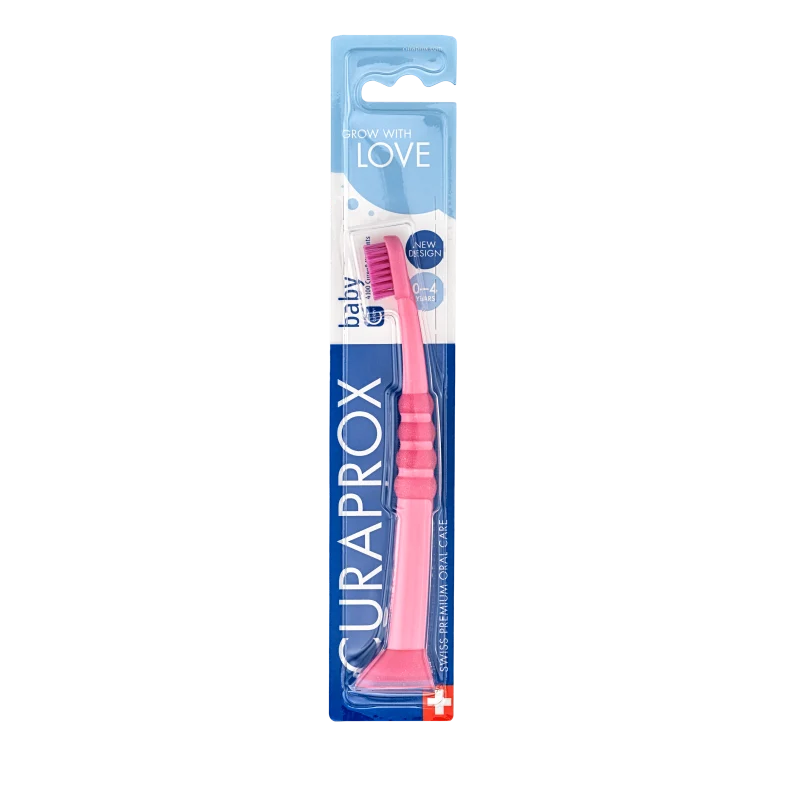
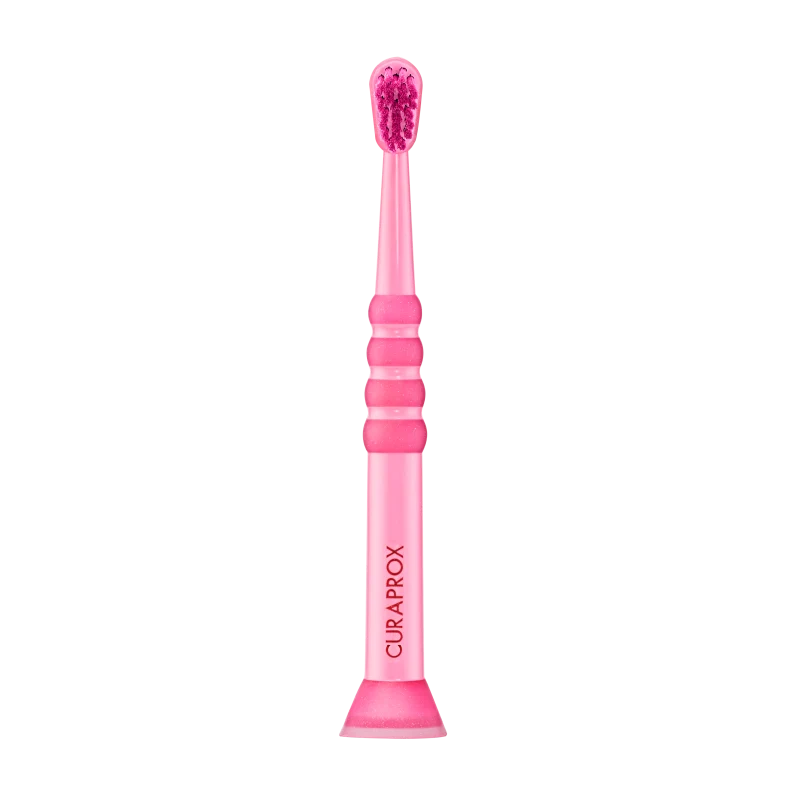
The Curaprox baby toothbrush gently cleans first teeth with 4,100 ultra-soft Curen® filaments, a redesigned brush head for better molar reach and a secure, rubber-coated grip.
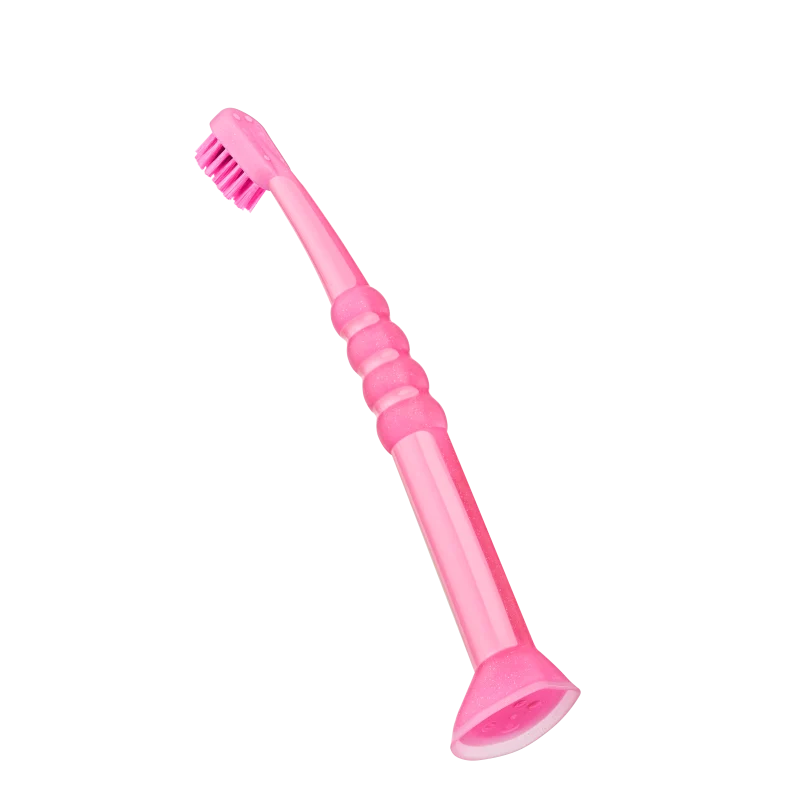
The Curaprox baby toothbrush makes early brushing safe, gentle and effective. Its redesigned, rotated brush head helps you reach hard-to-reach molars, while 4,100 ultra-soft Curen® filaments remove plaque thoroughly without irritating delicate gums. The smaller, slimmer head offers precise control, and the soft, rubberized coating helps protect your baby’s mouth.
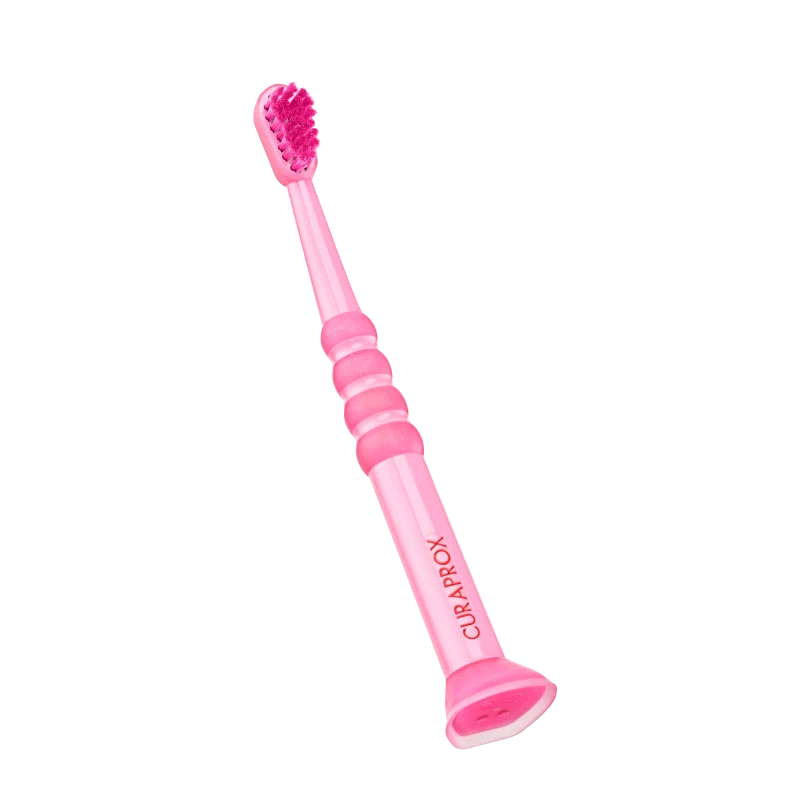
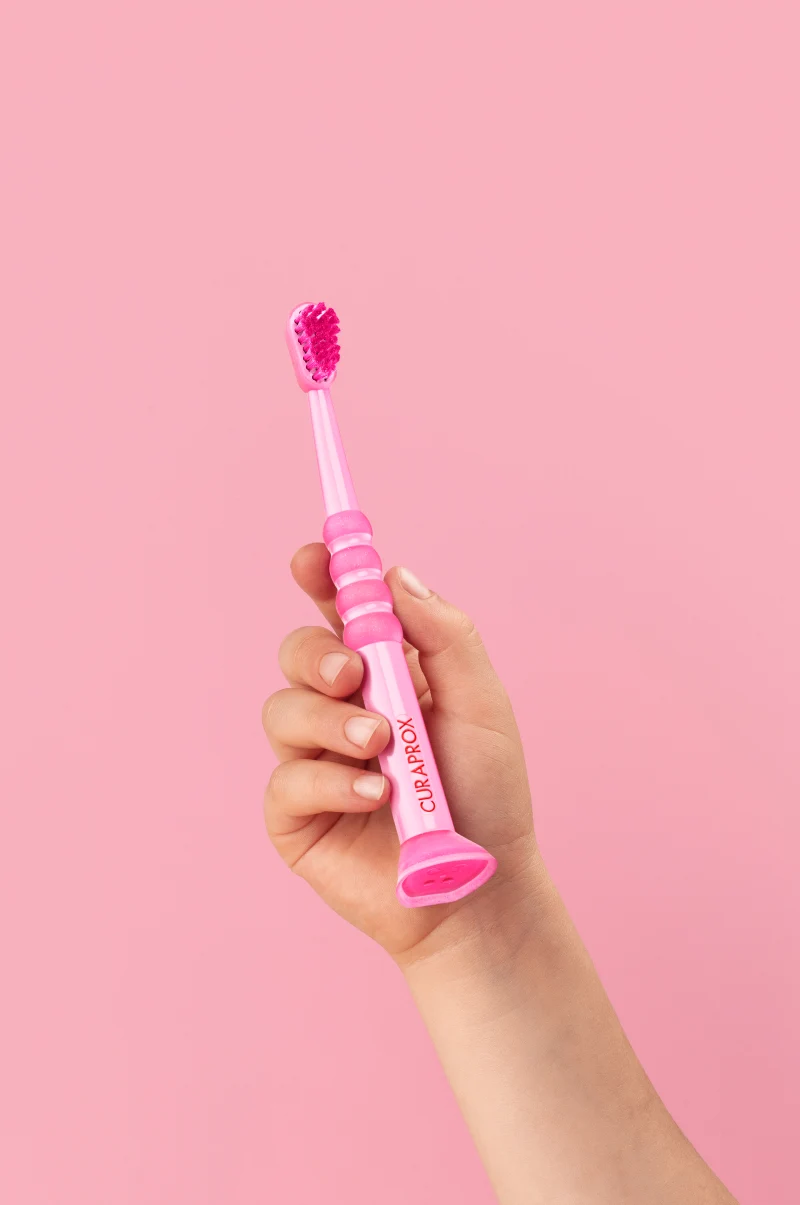
A rounded, anti-slip handle sits securely in both baby and parent hands, while the improved suction base keeps the brush upright and hygienic. Developed with dental experts and made from safe materials, it is ideal from the very first tooth up to age four.
From the first tooth up to age four
4,100 ultra-soft Curen® filaments
Redesigned, brush head for better reach
Smaller, slimmer head for precise control
Rounded, anti-slip handle with soft coating
Improved suction base
Developed with dental experts
Do kids toothbrushes need to be hard to last longer?
No. A hard baby toothbrush or a stiff kids’ toothbrush hurts the sensitive gums, which may be extra delicate because a tooth is coming through. A toothbrush that's too hard can hurt and cause pain—and it can also scare your kid, so they won't want to open their mouth next time. A super-soft toothbrush is way better, builds trust, and encourages children to cooperate, as they learn that a soft toothbrush does not hurt.
How do I get my child to enjoy brushing?
Let’s be honest: toothbrushing with children can be both a challenge and stressful endeavour, three times a day. But with our baby and children’s products it’ll get easier. Because they come with great design, bright colours, tasty flavours, and super-fine bristles. By the way, with our Kids Special Edition and their colourful brushes, this daily and important ritual becomes much more exciting and fun. Also, a good setting, enough light, a well-placed mirror, singing while brushing or telling fun stories, and parents who lead by example will help children to acquire a good habit.
When should I switch from a baby toothbrush to a kids’ toothbrush?
At around the age of 4, your child can switch from the baby toothbrush to a larger kids toothbrush. Children will have more teeth by this time and a larger toothbrush will provide a larger and denser cleaning surface. The kids toothbrush is ideal as it comes with ultra-soft bristles and a practical handle which allows your child to hold the brush properly.
For 100% oral health
Recently viewed
Do kids toothbrushes need to be hard to last longer?
No. A hard baby toothbrush or a stiff kids’ toothbrush hurts the sensitive gums, which may be extra delicate because a tooth is coming through. A toothbrush that's too hard can hurt and cause pain—and it can also scare your kid, so they won't want to open their mouth next time. A super-soft toothbrush is way better, builds trust, and encourages children to cooperate, as they learn that a soft toothbrush does not hurt.
How do I get my child to enjoy brushing?
Let’s be honest: toothbrushing with children can be both a challenge and stressful endeavour, three times a day. But with our baby and children’s products it’ll get easier. Because they come with great design, bright colours, tasty flavours, and super-fine bristles. By the way, with our Kids Special Edition and their colourful brushes, this daily and important ritual becomes much more exciting and fun. Also, a good setting, enough light, a well-placed mirror, singing while brushing or telling fun stories, and parents who lead by example will help children to acquire a good habit.
When should I switch from a baby toothbrush to a kids’ toothbrush?
At around the age of 4, your child can switch from the baby toothbrush to a larger kids toothbrush. Children will have more teeth by this time and a larger toothbrush will provide a larger and denser cleaning surface. The kids toothbrush is ideal as it comes with ultra-soft bristles and a practical handle which allows your child to hold the brush properly.
How to brush my child’s teeth correctly?
Brushing should be a fun team effort. If your child is less than a year old, sit them on your lap with the back of their head resting against the crook of your arm or lay them on a changing table. You can also brush properly with them lying or sitting on the floor. Later, it is best if they stand in front of you with their head tilted back slightly, allowing you to see and reach all their teeth. Brush all teeth with small, gentle, circular movements—inner and outer sides as well as the chewing surfaces. Older children brush their teeth themselves, but we recommend that you supervise their brushing until the age of 10.
When should I take my child to the dentist for the first time?
Schedule the first dental visit for your child around the time their first tooth erupts, or by their first birthday, whichever comes first. This early introduction to the dentist helps establish good oral hygiene habits and allows the dentist to identify any potential issues early on. It also helps your child build a good relationship with the dentist and strengthens the confidence that they don't only have to go to the dentist when their teeth hurt.
Explore
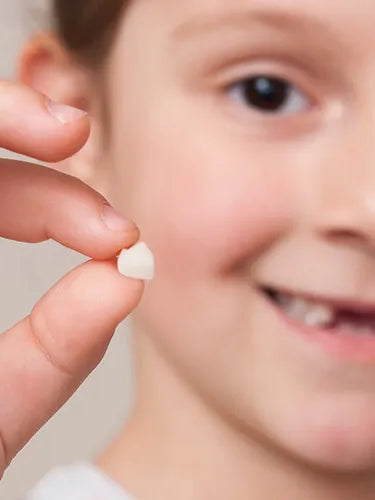
kids, parents, baby & kids
.
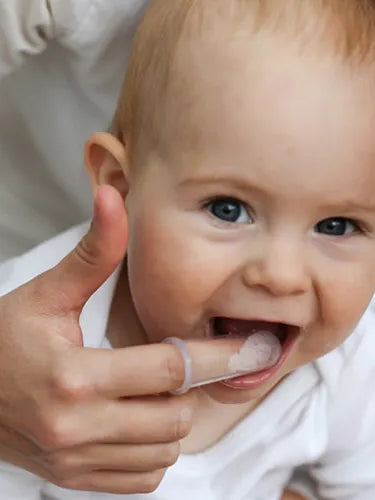
babies, parents, baby & kids
When a baby is teething, it's a reason to be happy: after all, the baby's smile looks twice as sweet with the first teeth. However, teething can be quite painful for the baby - and can also put a strain on the parents' nerves.
In this article, you will learn everything you need to know about the topic: When do babies teethe? What symptoms can you expect when teething? What to do with fever and diarrhoea? And above all: What helps with teething?

parents, baby & kids, prevention
If a baby is born before the 37th week of pregnancy, it is referred to as a premature birth.
Why does this happen? What consequences can a premature birth have? What are the signs of an imminent premature birth? And are there ways to prevent it? In this article you will find everything you need to know about premature birth.